


This post contains affiliate links. Thank you for supporting Beneficial Bento!
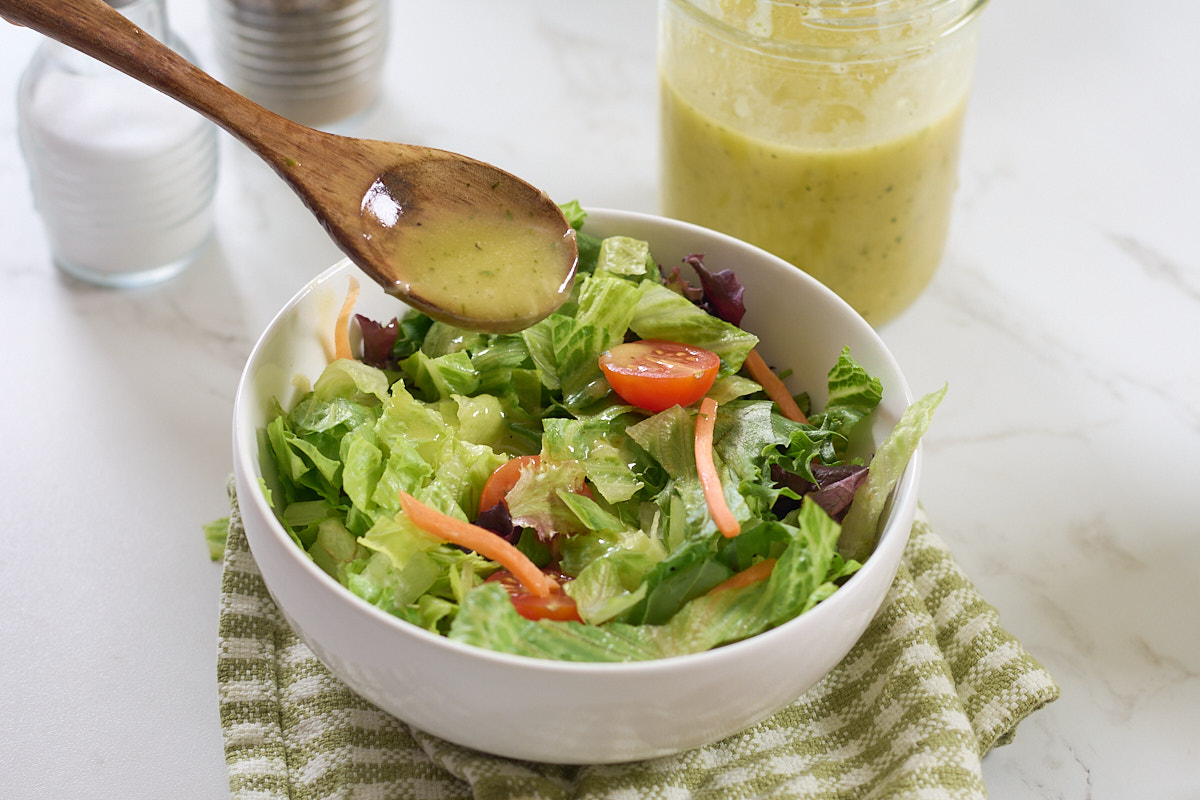
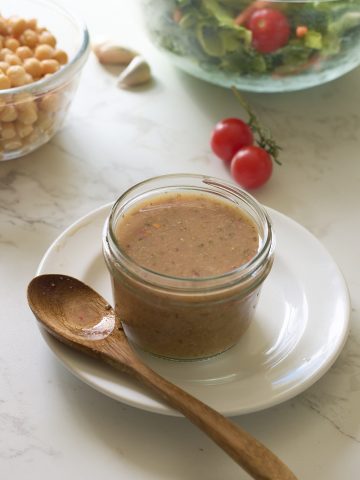
Garden herbs and lemon juice, tangy dijon and apple cider vinegar combined with rich olive oil make this fresh, flavorful vinaigrette. It's bright, it's zesty - it's a flavor bomb of garden freshness!
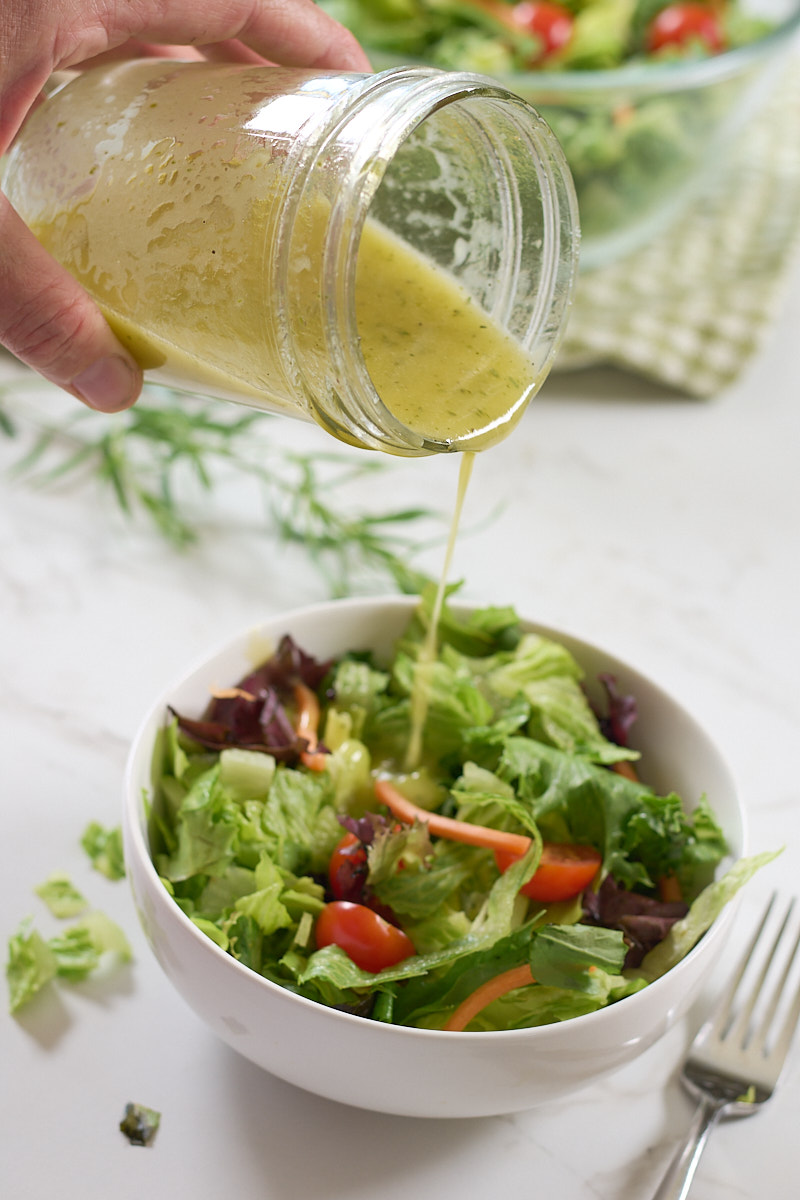
There's something so satisfying about picking fresh herbs from your garden and turning them into a homemade salad dressing that makes even some basic leafy greens into a delicious, restaurant-quality experience.
I'm especially talking about that moment when you realize you have way too much parsley, thyme, and rosemary flourishing outside (or on the windowsill), and instead of watching them go to seed, you bottle them into a dreamy, creamy vinaigrette.
This salad dressing is aromatic, bold, and SO easy to make.
So if your herbs are threatening to take over the garden, now you'll know exactly what to do with them.
Jump to:
Notes from Kristie's Kitchen
I created this recipe in the winter of 2025 when we had unusually warm weather. The herbs in my garden continued to grow clear into December, (which is pretty much unheard of here in Utah). I hated to see all those lovely fresh ingredients go to waste so I made this homemade dressing for Christmas gifts, along with herbed salt and herb flavored compound butter.
- Makes: one pint of salad dressing
- Prep time/ actual time spent in the kitchen: I'd say under 15 minutes, with most of that being the time it takes to chop the herbs. After that the dressing comes together really fast.
- The best tool: an immersion blender (or stick blender) is perfect for this recipe. You could shake this in a jar, but you won't get the same creamy, restaurant-quality texture. The immersion blender emulsifies the oil into the vinegar in seconds, and when used in a tall, narrow container, it creates a vortex that pulls everything together beautifully. If you don't have one, a regular blender works. Just blend on medium speed and drizzle the oil in slowly.
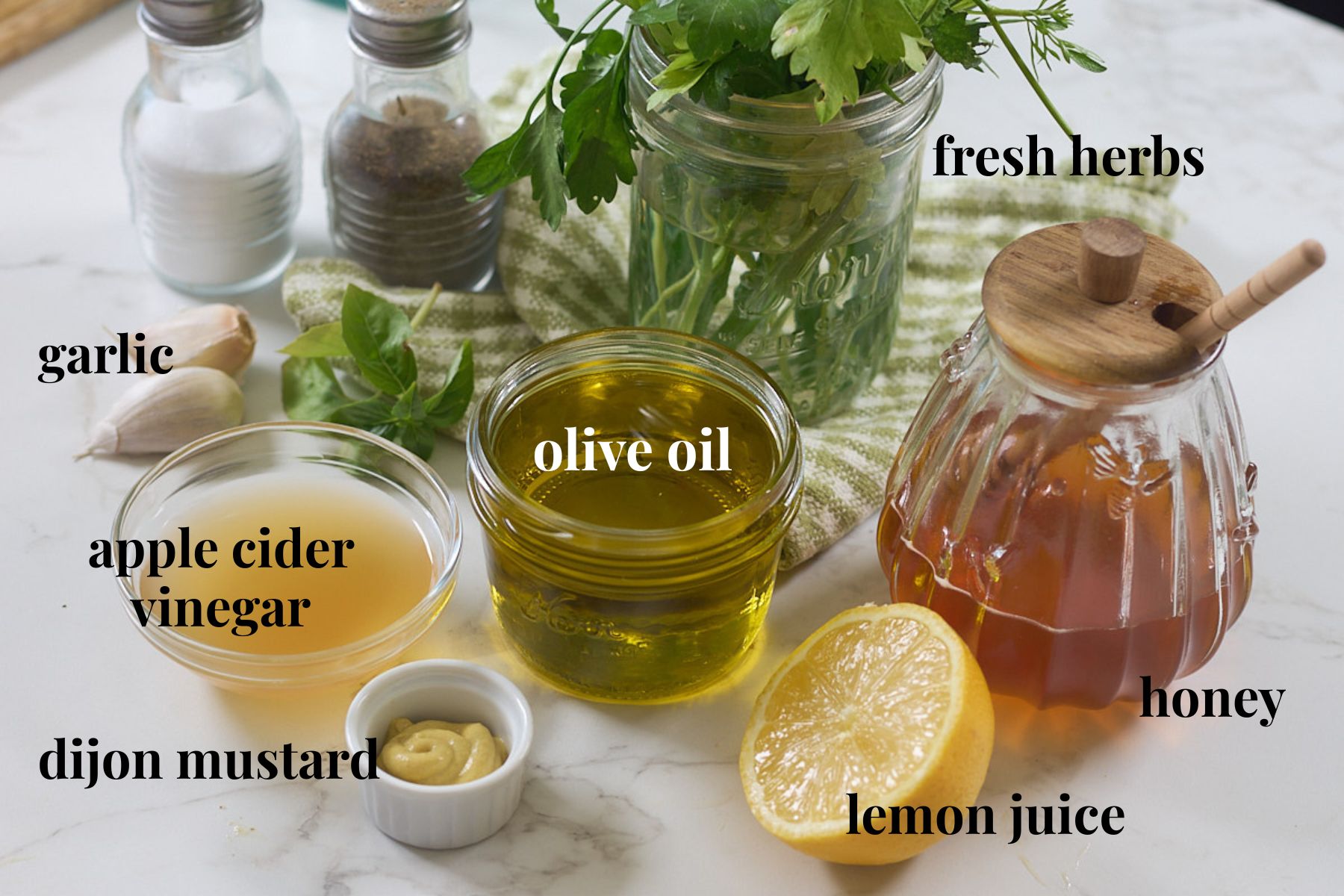
Ingredients List
All the ingredients have a job, and understanding what each one does will help you get the best results.
- Olive Oil (1 cup): This is your biggest flavor carrier, so don't cheap out. Use a high-quality extra virgin olive oil with a flavor you like because it will come through in the dressing. If your olive oil solidifies in the fridge, that's okay. Just let the dressing sit at room temp for 10 minutes before serving.
- Apple Cider Vinegar (¼ cup): Provides acidity and acts as a natural preservative. Apple cider vinegar has a mellower, slightly fruity tang compared to white or red wine vinegar. You can swap in white wine vinegar for a lighter, more delicate flavor, but avoid balsamic (too sweet and dark) or distilled white (too harsh).
- Lemon Juice (2 tablespoons): Adds a fresh citrus note that apple cider vinegar alone can't deliver. Either fresh squeezed, or bottled lemon juice are great.
- Garlic (1 ½ teaspoons, microplaned): This is what makes the dressing unforgettable. Microplaning turns raw garlic into a smooth paste that blends seamlessly and delivers bold, even flavor without any bite-sized chunks. One and a half teaspoons might sound like a lot, but when distributed through a full cup of oil, it's just right. If you're garlic-shy, start with one teaspoon.
- Fresh Herbs (2 tablespoons, finely chopped): The star of the show. Parsley, thyme, and rosemary create an earthy, aromatic base, but you can absolutely swap in basil, oregano, chives, or tarragon depending on what's growing. The key is chopping them ultra-fine or pulsing a larger amount in a spice grinder so they integrate into the dressing instead of floating on top.
- Dijon Mustard (1 teaspoon, or more): Acts as an emulsifier, helping the oil and vinegar stay blended. It also adds a subtle sharpness and complexity. Whole grain mustard works too and adds a nice texture.
- Honey (1 tablespoon): Balances the acidity and rounds out the sharpness of the garlic. If you're watching carbs, the recipe offers a hybrid option: one tablespoon of granular monk fruit sweetener plus two teaspoons of honey. The monk fruit provides bulk and sweetness without spiking blood sugar, while the small amount of honey adds the viscosity and flavor complexity that straight erythritol lacks.
- Salt (½ teaspoon): Salt doesn't just season-it amplifies every other flavor in the dressing. Start with half a teaspoon, blend, taste, and adjust.
- Black Pepper (¼ teaspoon): Adds a gentle warmth and complexity. Freshly cracked is great, but pre-ground works fine here since it's blended in.
Tools You Might Need
Even though you could still make this salad dressing with just a knife, a bowl, and a whisk (and a lot of elbow grease), here are the tools I use that will make this recipe so much easier for you. I want you to succeed!
Tools for Homemade Salad Dressing
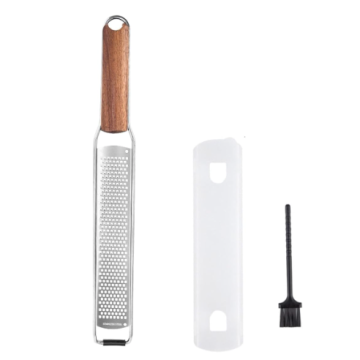 Buy Now →
 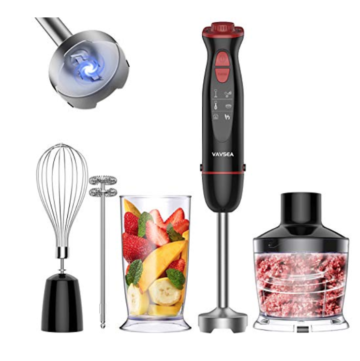 Buy Now →
Ball Wide Mouth Pint Glass Mason Jars with Lids and Bands
Buy Now →Step by Step
This recipe is really straightforward. Follow the steps and let the pictures be your guide. The full recipe will be down in the recipe card (keep scrolling).
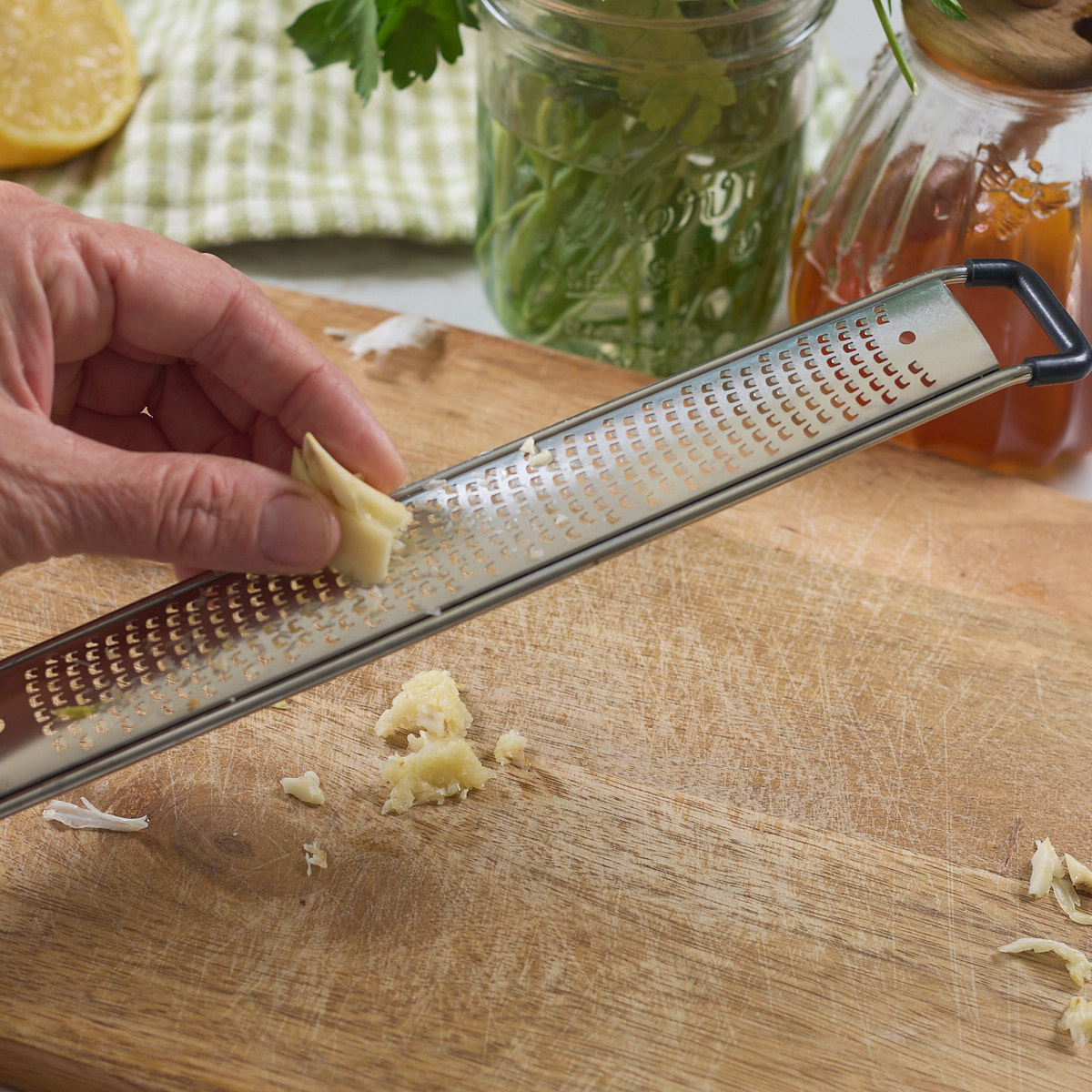
Step 1. Prep the garlic: Use a microplane to finely grate about one and a half teaspoons of garlic. You want it to look like a smooth paste, not little chunks. This texture is everything-it distributes evenly and doesn't create pockets of garlic fire in your salad.
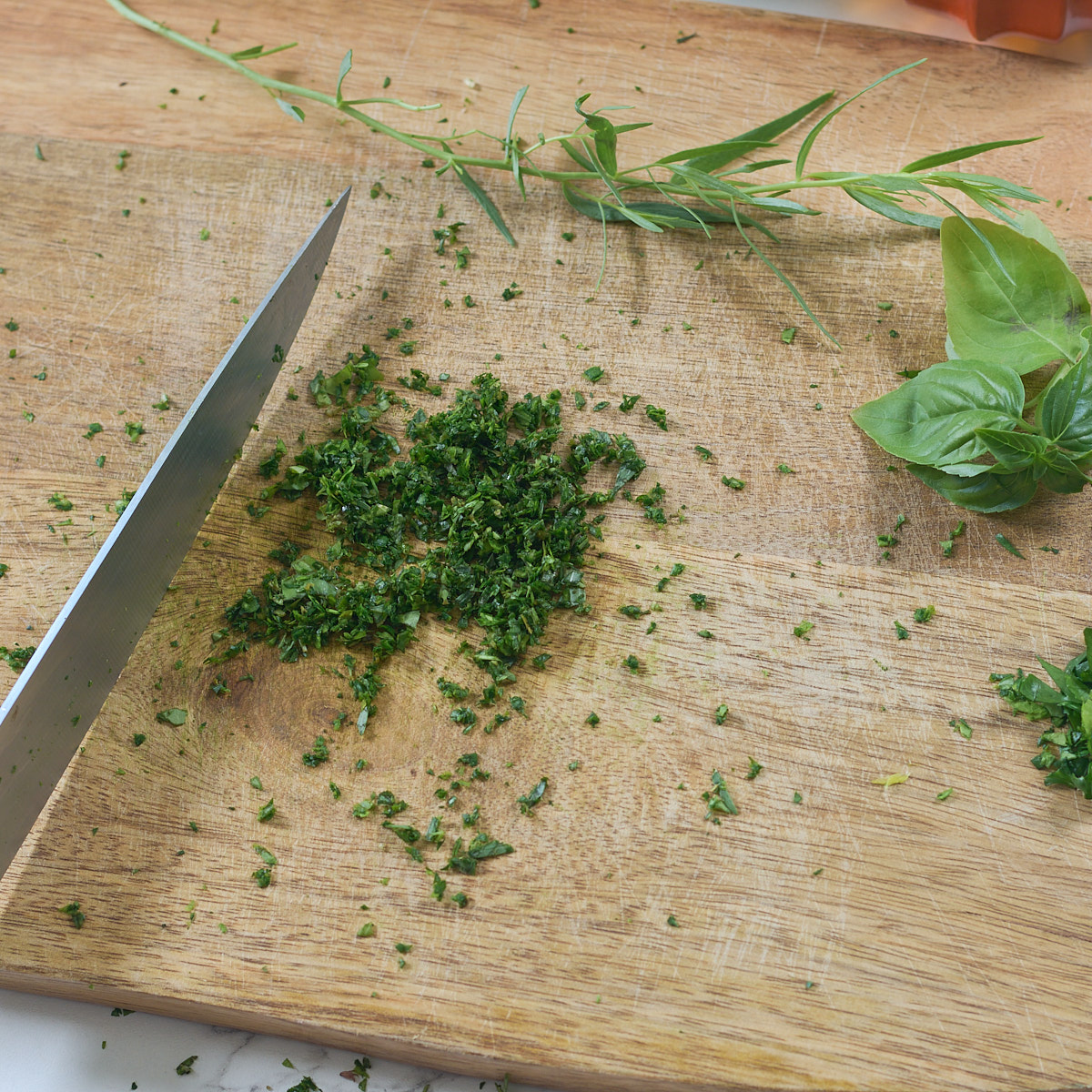
Step 2. Chop the herbs: After the herbs have been cleaned and dried, strip leaves from their stems, then finely mince everything together with a sharp knife or pulse in a spice grinder until they're almost powdery. Measure out two tablespoons. If you have extra, save it for compound butter or herb salt.
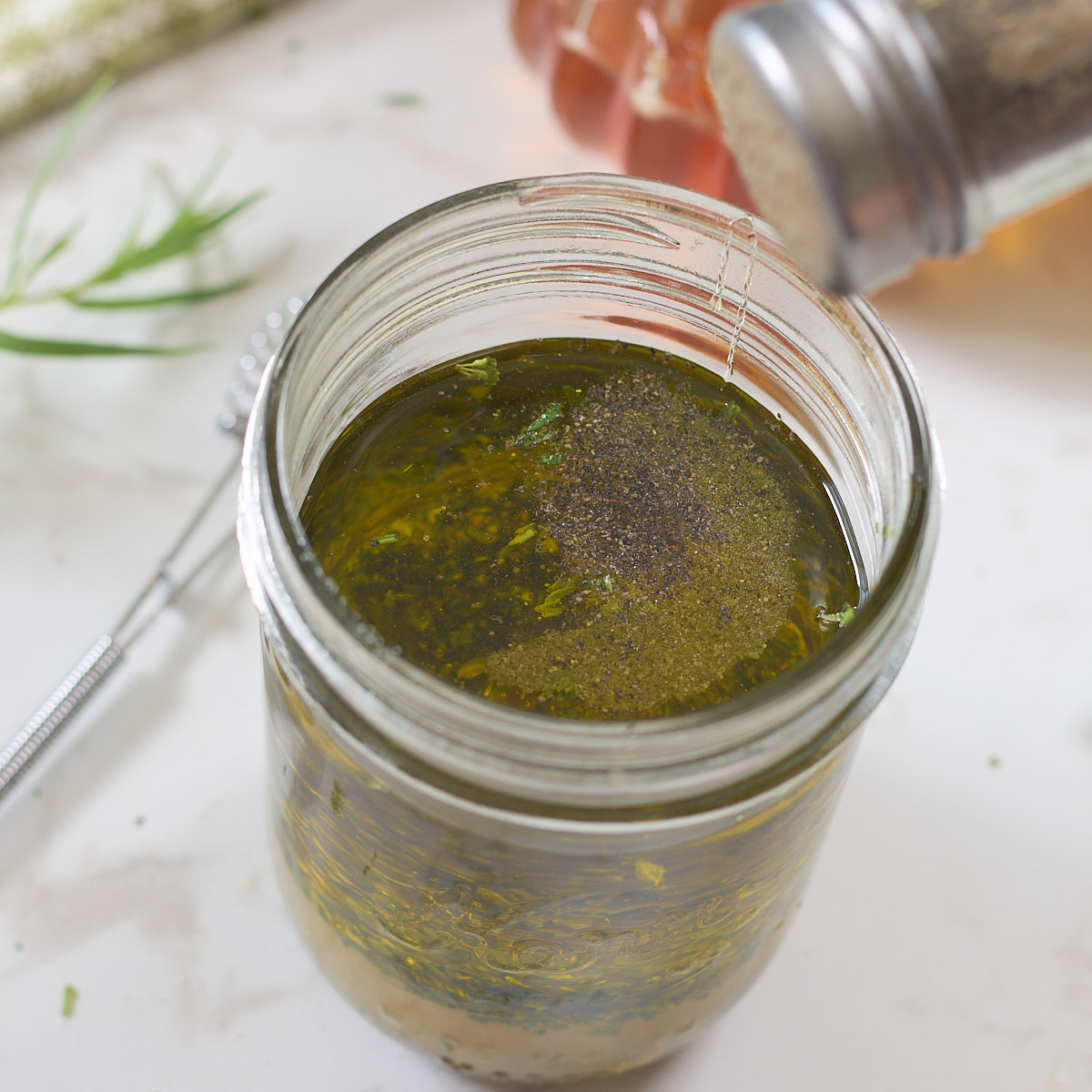
Step 3. Combine everything in a tall container: Add the olive oil, apple cider vinegar, lemon juice, garlic, herbs, mustard, sweetener, salt, and pepper. Just make sure your container is tall and narrow enough that the immersion blender head will be fully submerged.
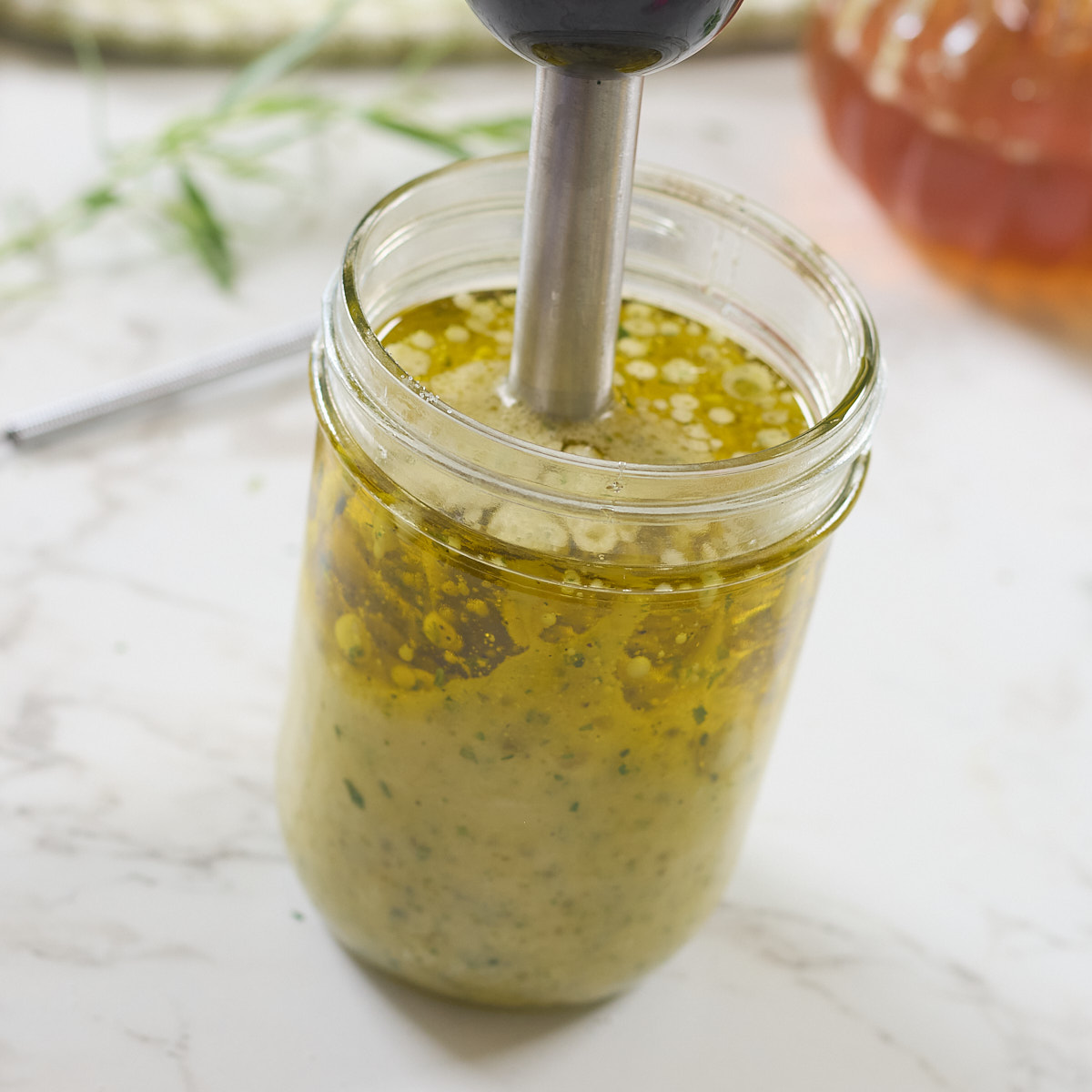
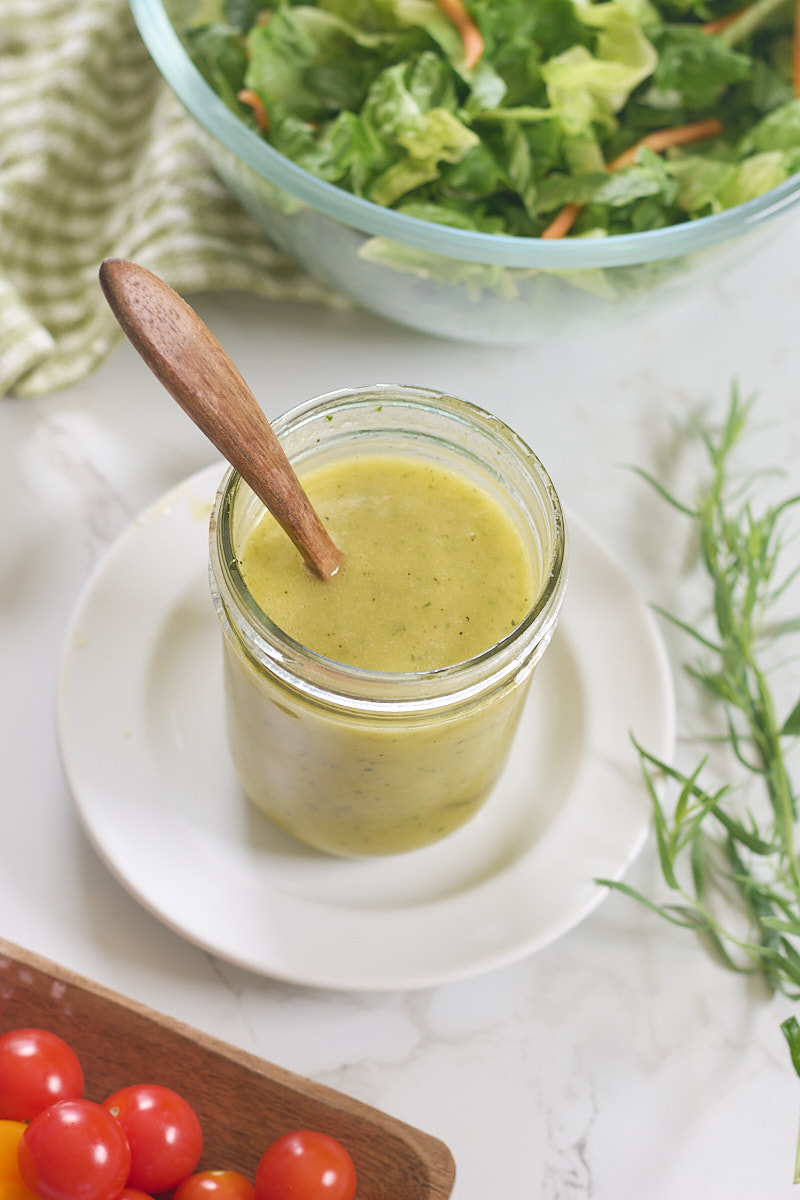
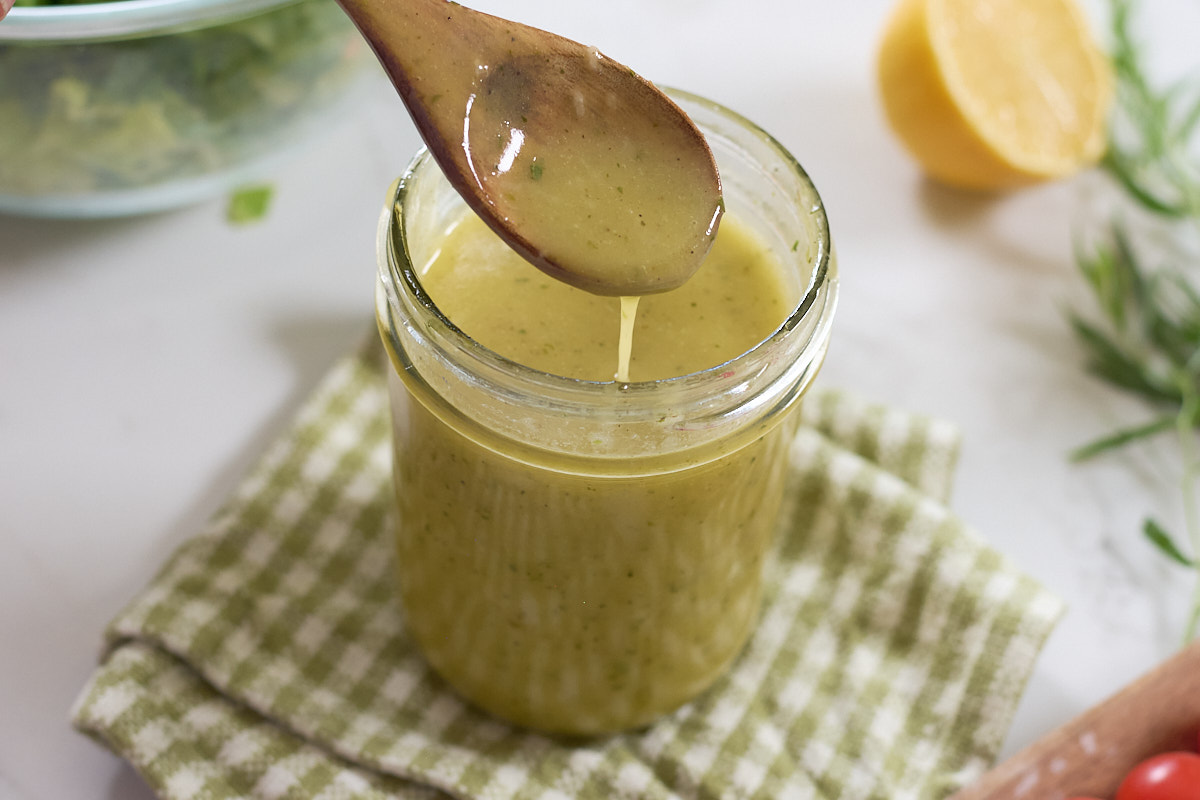
Step 4. Blend until creamy: Insert the immersion blender all the way to the bottom of the container. Turn it on and keep it at the bottom for a few seconds to start the emulsion. Then slowly move the blender up and down through the mixture for another 10 to 15 seconds. You'll see the dressing transform into a thick, creamy, pale green emulsion.
Herb Prep 101
When you're working with fresh herbs, how you prepare them varies depending on what you're serving. Here are three common prep methods and when to use them.
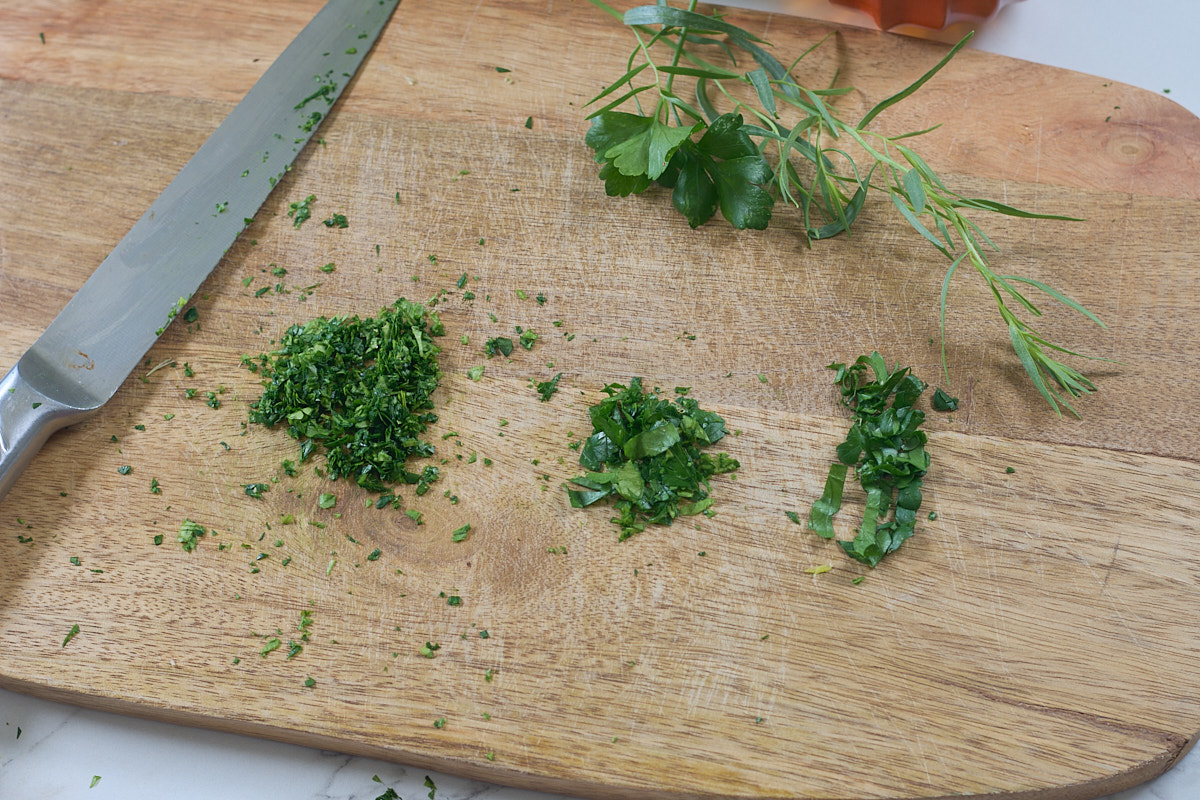
- Finely chopped: this method will release the herb's natural oils and blend into the salad dressing, diffusing the flavor more evenly. How to do it: remove the thick stems, bundle the leaves together, and just get busy with that knife! Gather them together in a bunch again, and chop, chop, chop again until they are super-fine, as shown in the picture.
- Coarsely chopped: this method lets the herb really stand out. It's best for sprinkling on top of foods, like pasta or pizza. You don't want coarsely chopped herbs in salad dressing, or you might be picking them out of your teeth later. How to do it: chop them as described above, but you probably only have to do it once.
- Chiffonade: this term means to cut them into longer strands, like little ribbons. It's decorative, and lets the flavor of the herb be the main thing. I love doing this with basil leaves and sprinkling them over tomato basil soup right before serving it. How to do it: stack broad leaf herbs like basil or mint, and slice them with very small strokes of your knife to make fine ribbons.

Homemade Creamy Garlic Vinaigrette with Fresh Herbs
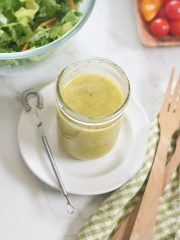
Garden herbs and lemon juice, tangy dijon and apple cider vinegar combined with rich olive oil make this fresh, flavorful vinaigrette. It's bright, it's zesty - it's a flavor bomb of garden freshness!
- Prep Time: 10 minutes
- Total Time: 10 minutes
- Yield: 1 pint, or 2 cups 1x
- Category: salad dressing, salad recipe, salads
- Diet: low sugar, Low-Carb
Ingredients
- 1 cup olive oil
- ¼ cup apple cider vinegar
- 1 ½ teaspoon finely grated garlic (use a microplane)
- 2 tablespoons lemon juice
- 2 tablespoons of fresh herbs. I used Italian parsley, rosemary leaves, tarragon and thyme leaves, very finely minced.
- 1 teaspoon dijon mustard, or to taste
- 1 tablespoon honey, or to make low carb - 1 tablespoon granular monkfruit sweetener plus 2 teaspoons honey (subtract honey's carbs from monkfruit's sugar alcohols to get net carbs)
- ½ teaspoon salt
- ¼ teaspoon ground black pepper
Instructions
- Use a microplane to finely grate the garlic.
- Finely chop some fresh herbs like parsley, thyme, and rosemary. Other good choices are basil, oregano, and tarragon. Chop the herbs and then measure out 2 tablespoons to add to the recipe.
- In a container with tall sides, add all the ingredients.
- Using an immersion blender, blend the ingredients, moving the blender slowly up and down to emulsify the dressing.
Notes
Notes: Store in the refrigerator in airtight container, or a mason jar with a lid. If the dressing becomes solid, set it out at room temperature until it becomes more fluid again. Shake before serving.
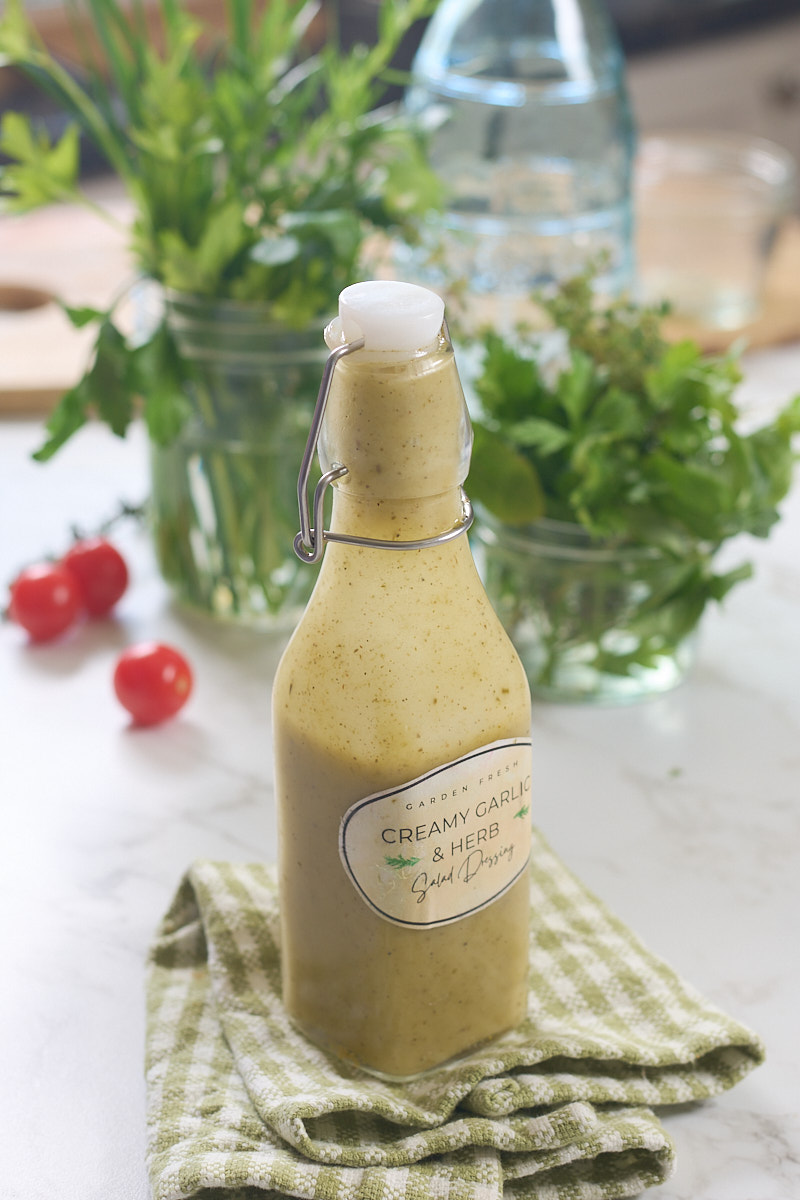
Bonus Tip 👇
Double or triple the batch and bottle it as gifts: It's easy! Buy some 8-ounce glass bottles with swing tops or cork stoppers, add a handmade label, and you've got a thoughtful, homemade gift that people will actually use.
A food processor or blender is a great way to mix up a large batch of this dressing, which will save you some time.
If it's made with fresh ingredients, like fresh herbs and citrus juice, it can last up to 2 weeks in the refrigerator.
Keep it in an airtight container such as a salad cruet or a mason jar with a tight fitting lid. If it contains dairy, fresh chopped herbs, or fresh citrus juice it should be kept in the refrigerator.
If it tastes bitter, rancid, or stale, it is most likely spoiled.
Olive oil solidifies in the fridge because it is high in monounsaturated fats and natural plant waxes. When exposed to cold temperatures the fats crystalize and separate, causing the oil to become cloudy, chunky, or solid like cold coconut oil.
What to Eat with This Recipe
If you need some meal planning inspiration, how about these tried and true family favorites?
Spaghetti sauce + Italian style meatballs + salad bowl + garlic and herb dressing = hearty spaghetti dinner
Salad bar + crispy chickpeas + GF breadcrumbs + Healthy 8 mix + garlic and herb dressing + homemade ranch dressing = Stellar salad bar for a party
Salad bowl + garlic and herb dressing + pot roast + mashed potatoes + apple pie = All american Sunday dinner
More Dressings & Seasonings

Recipe creator: Kristie Winget, who loves growing herbs. And at times they do threaten to take over the garden! Here's a little more about me.
Comments
No Comments