





This post contains affiliate links. Thank you for supporting Beneficial Bento!
Have you ever wished you could capture the sweet and tangy flavor of sun-ripened tomatoes from your garden? Make homemade tomato sauce and you can savor that delicious flavor long after summer ends.
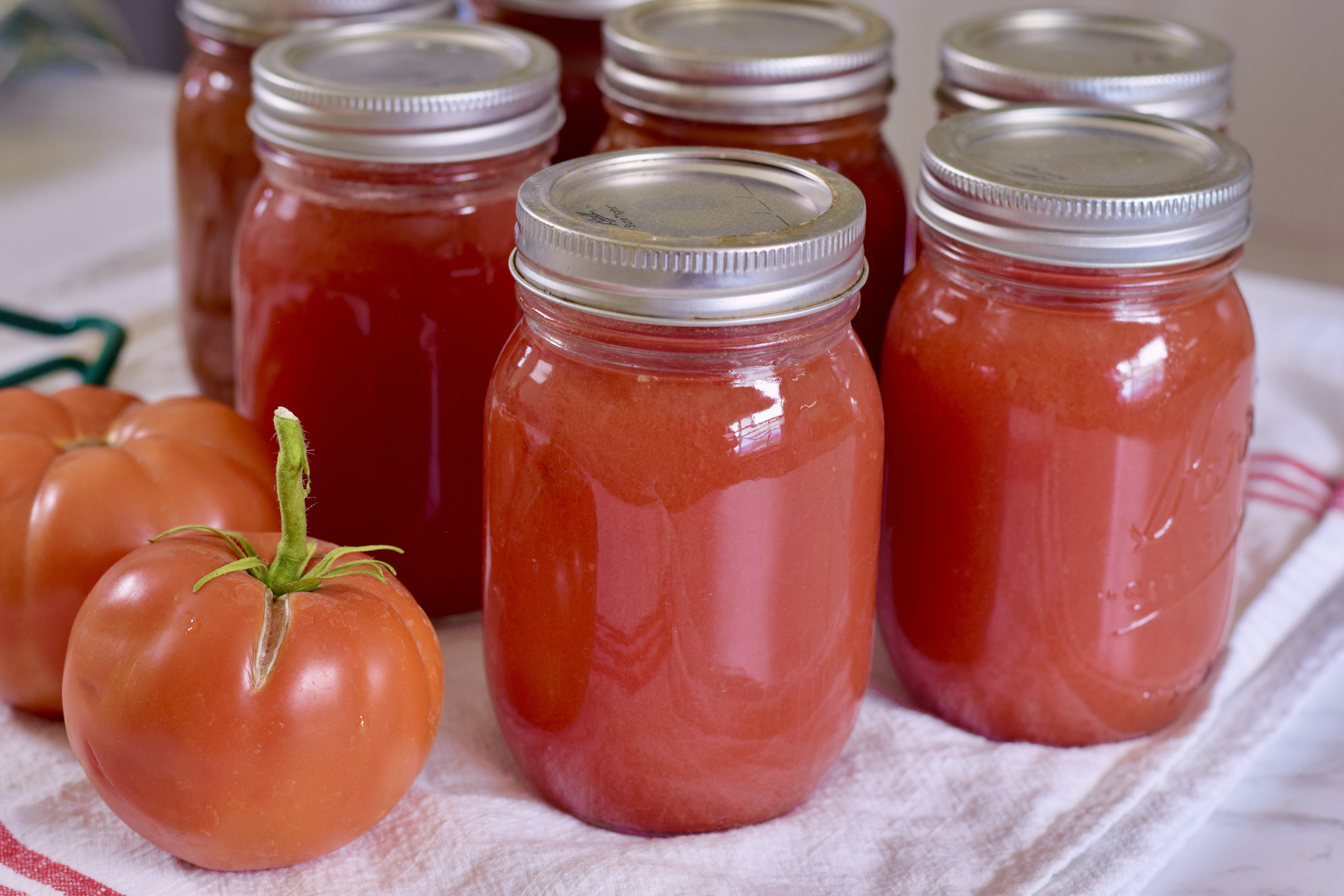
Or if you've just been wondering what it takes to turn fresh tomatoes into jars of delicious tomato sauce, then wonder no more.
Making your own homemade sauce isn't hard if you have the right tools and a step by step guide to help you. In this post you will learn:
- how to choose tomatoes
- how to prep them for making sauce
- how to safely store homemade tomato sauce
- how to can tomato sauce using the water bath canning method
I will walk you through the steps with pictures, and give you some ideas for recipes that use homemade tomato sauce.
Jump to:
What You Will Need
You only need 2 ingredients if you're canning tomatoes, and just tomatoes alone if you are planning on freezing your tomato sauce. Here's what you need:
- a lot of tomatoes: you probably won't have 15 pounds of tomatoes coming out of your garden all at the same time, but don't worry about that. I have learned to cut my tomatoes in half and stash them in the freezer in a freezer bag until I have enough to make a batch of fresh tomato sauce. You can also buy some tomatoes from a farmer's market, or a combination of both.
- citric acid: used to boost acidity, enhance flavor, and preserve food. If you're not sure if you want to add citric acid to your fresh tomato sauce recipe, read this article to decide if it's right for you. I feel like it's the perfect way to enhance the tangy, juicy flavor of ripe tomatoes without adding in any other flavors to alter their taste.
- lemon juice: perfectly fine as an alternative to citric acid. But you have to use a lot more lemon juice than citric acid to preserve the tomato sauce, and it's a little too much lemon flavor for my taste.
How to Choose Tomatoes
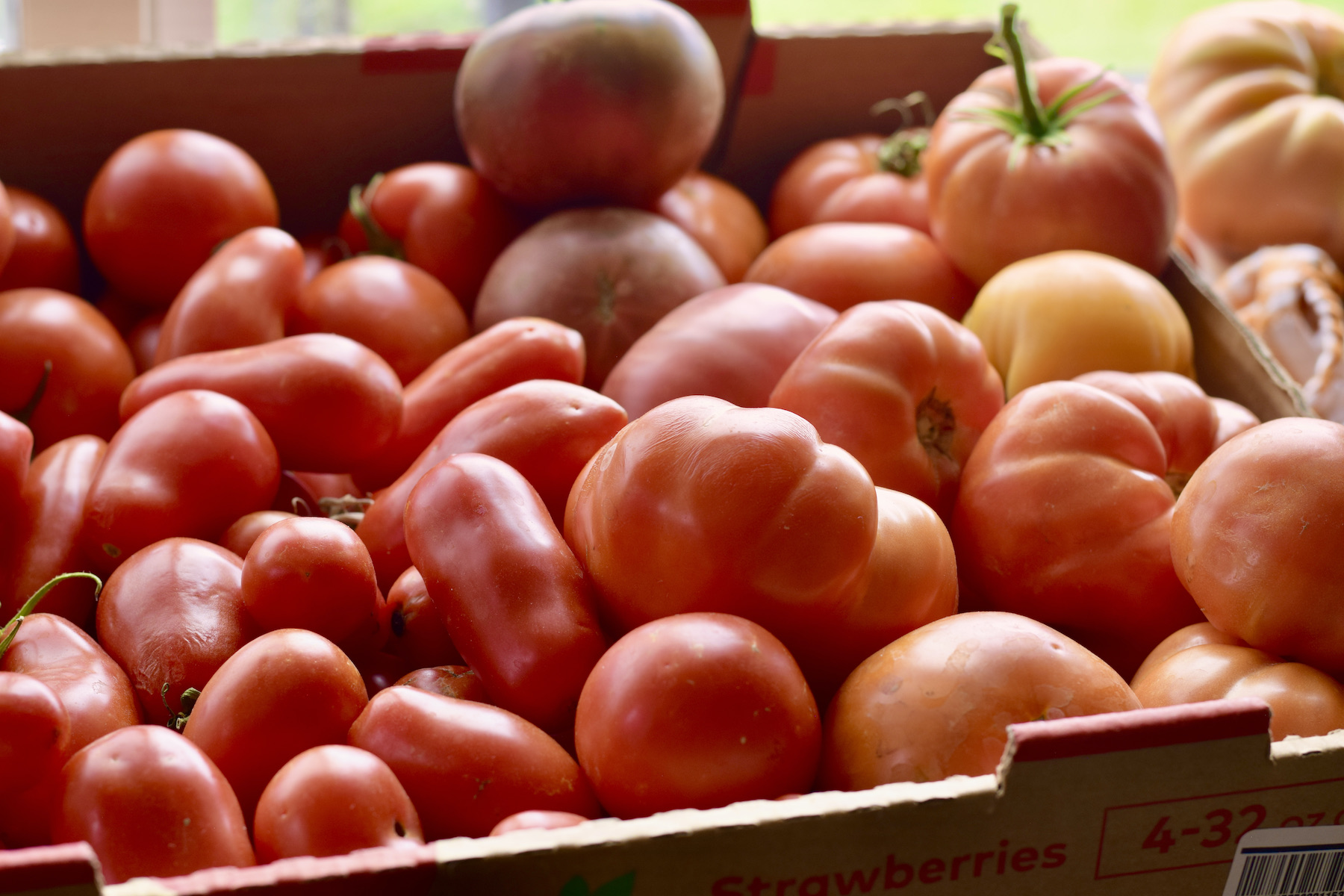
The kind of tomatoes you use for making tomato sauce does matter. I prefer to use a mix of paste tomatoes like Roma or San Marzano for that thick base texture, then sneak in some heirloom varieties for added tang and a delicious burst of sweetness.
Aim for firm but ripe tomatoes to get the best burst of flavor and easy processing without mushiness.
I'll list some common tomato varieties, and whether it's a good idea to use them for making tomato sauce
- Paste tomatoes (also called plum tomatoes): Roma tomatoes and San Marzano tomatoes are the main types that I use for making fresh sauce. They have less water content than other varieties, which makes them perfect for tomato sauce.
- Heirloom tomatoes: the best tomatoes in the world! The first time you taste one, sweet and still warm from the sun, you will not settle for anything that comes from the grocery store. Heirlooms do NOT have the genetic mutation that grocery store varieties have which makes them have a uniform size and color, but at the expense of sweetness (which is why heirlooms are so great). They have too much juice to be made into sauce on their own, but are excellent combined with paste tomato varieties.
- Cherry tomatoes: similar to heirloom in that they are full of juice. Since they are so small and full of juice, it's really not worth including them in your tomato sauce.
- Grape tomatoes: have a meatier texture and lower water content than cherry tomatoes, but with the amazing sweetness of an heirloom. They can be cooked without entirely evaporating, unlike a cherry tomato. If you have a lot of grape tomatoes, why not throw them in the food mill with your other tomatoes? I wouldn't try to make tomato sauce out of just grape tomatoes though.
How to Prep Tomatoes
- Rinse tomatoes with water and remove any leaves or stems.
- You will need to remove the skins and seeds to make a smooth tomato sauce. There are more time-consuming methods, but the most efficient way is to use a food mill.
Food Mill - Easiest Way to Turn Tomatoes Into Sauce
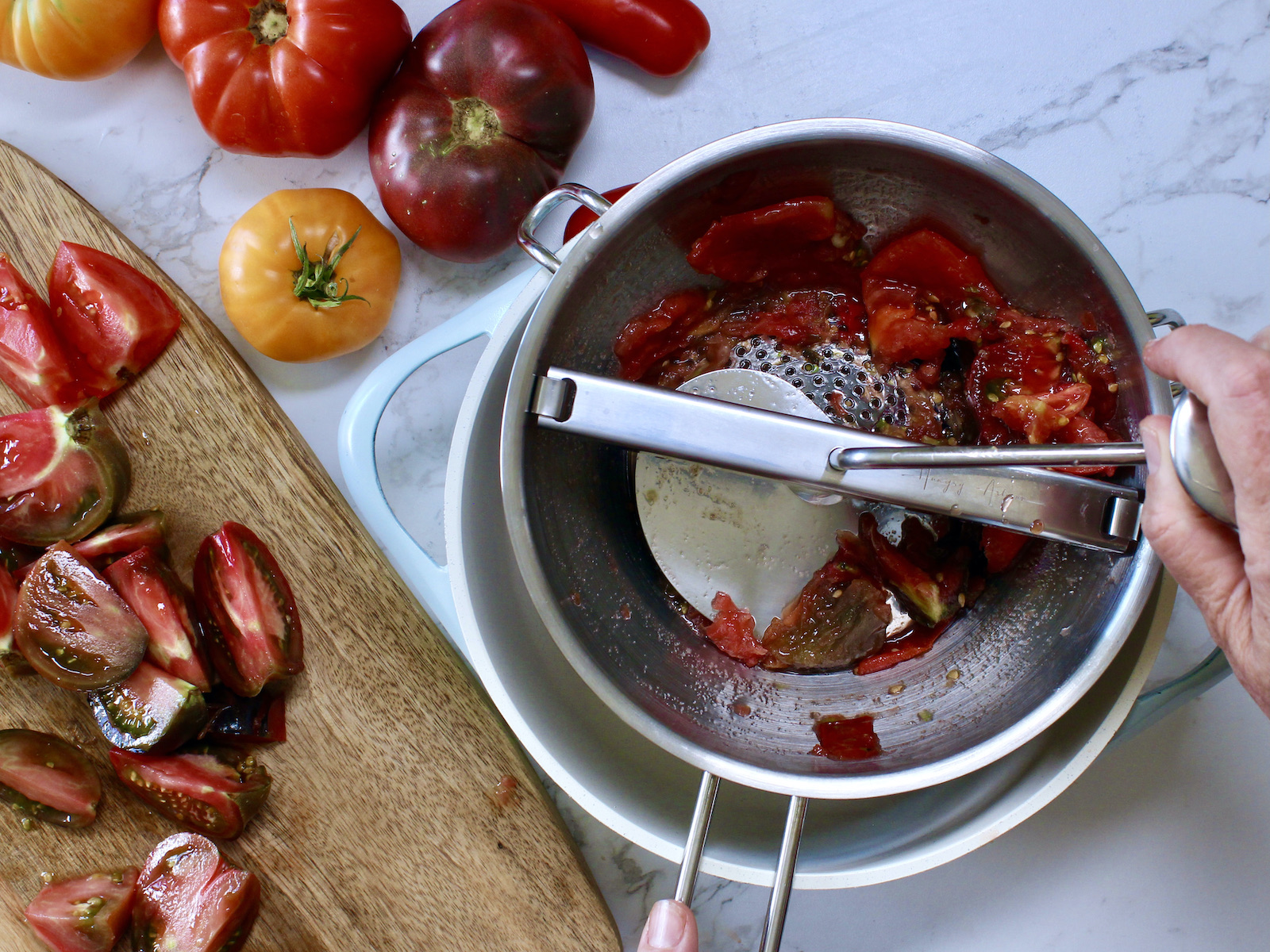
If you use a food mill, you don't have to worry about peeling or seeding your tomatoes - the machine does it for you. I have 2 types of food mills, and there things I like (and don't like) about both.
Small Food Mill - Pros and Cons
There are some small food mills that fit inside a large bowl or pan that are very convenient to use and especially to store.
✅ Pros:
- It fits on a shelf or in a drawer, so it's easy to store.
- It takes less time to set up than the large food mill.
- It costs the least of all the food mills I've tried.
- All the parts can go in the dishwasher.
❌ Cons:
- It takes a long time to make sauce, especially if you have a lot of tomatoes.
- It tends to get clogged with skins and seeds, so you have to stop and clear them out frequently.
- It can put strain on your shoulders and back if you use it for a long time.
Large food Mill - Pros and Cons
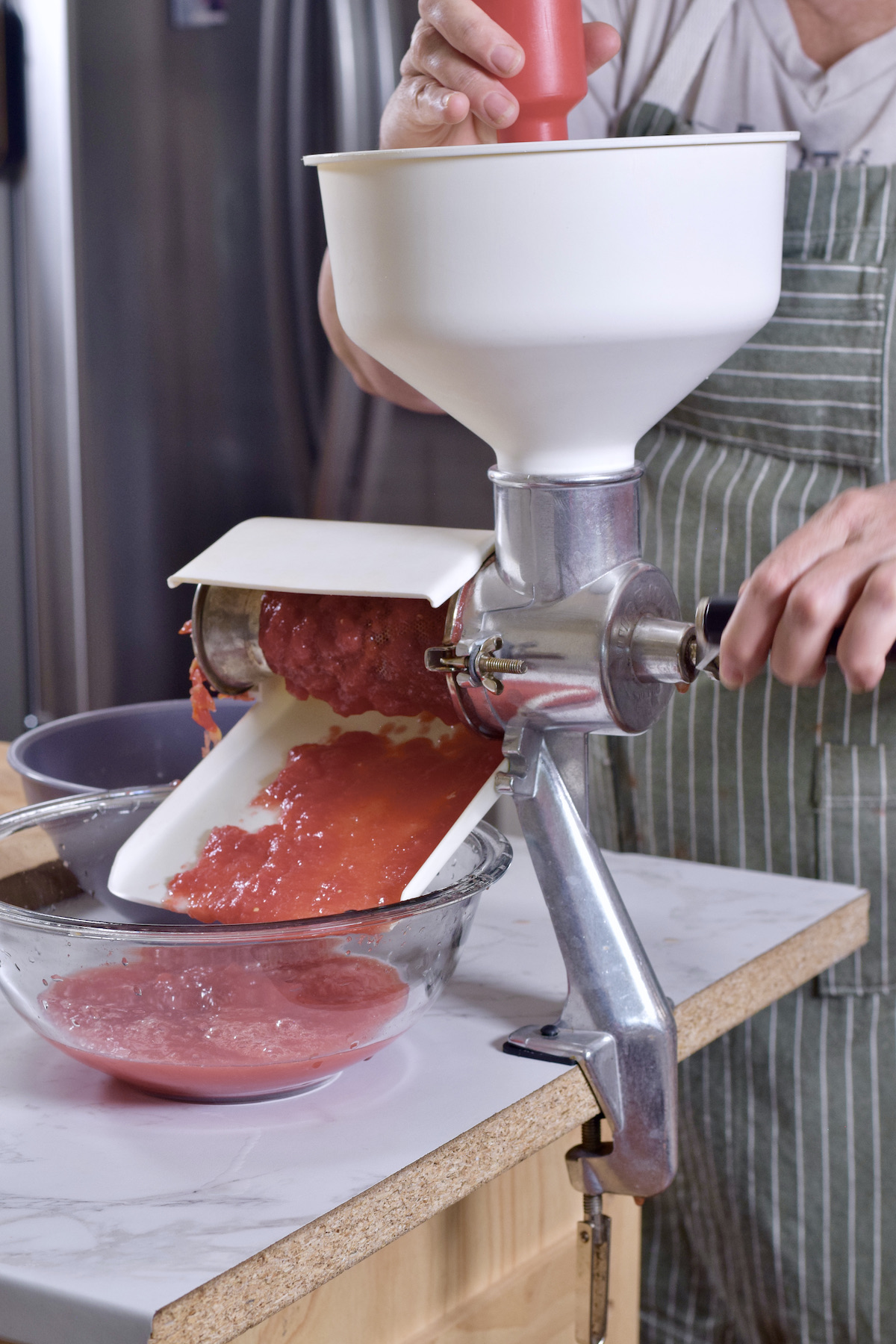
There are a few large food mills on the market, such as this Victorio strainer shown in the picture, which has a hand crank. I have since discovered a fantastic electric food mill that saves even more time and can be set up on a countertop (instead of the edge of a table).
✅ Pros:
- It's the fastest way to process a lot of tomatoes.
- It makes a lot of sauce in relatively little time.
- You get much less strain on your back and neck since you stand upright while you use it.
❌ Cons:
- It takes more time to set up than the small food mill.
- The pieces are awkwardly shaped and could be hard to store (I keep mine in a box in the garage).
- Not all the pieces can go in the dishwasher - some are better washed by hand.
- It's more expensive than a small food mill.
Best Ways to Store Homemade Sauce
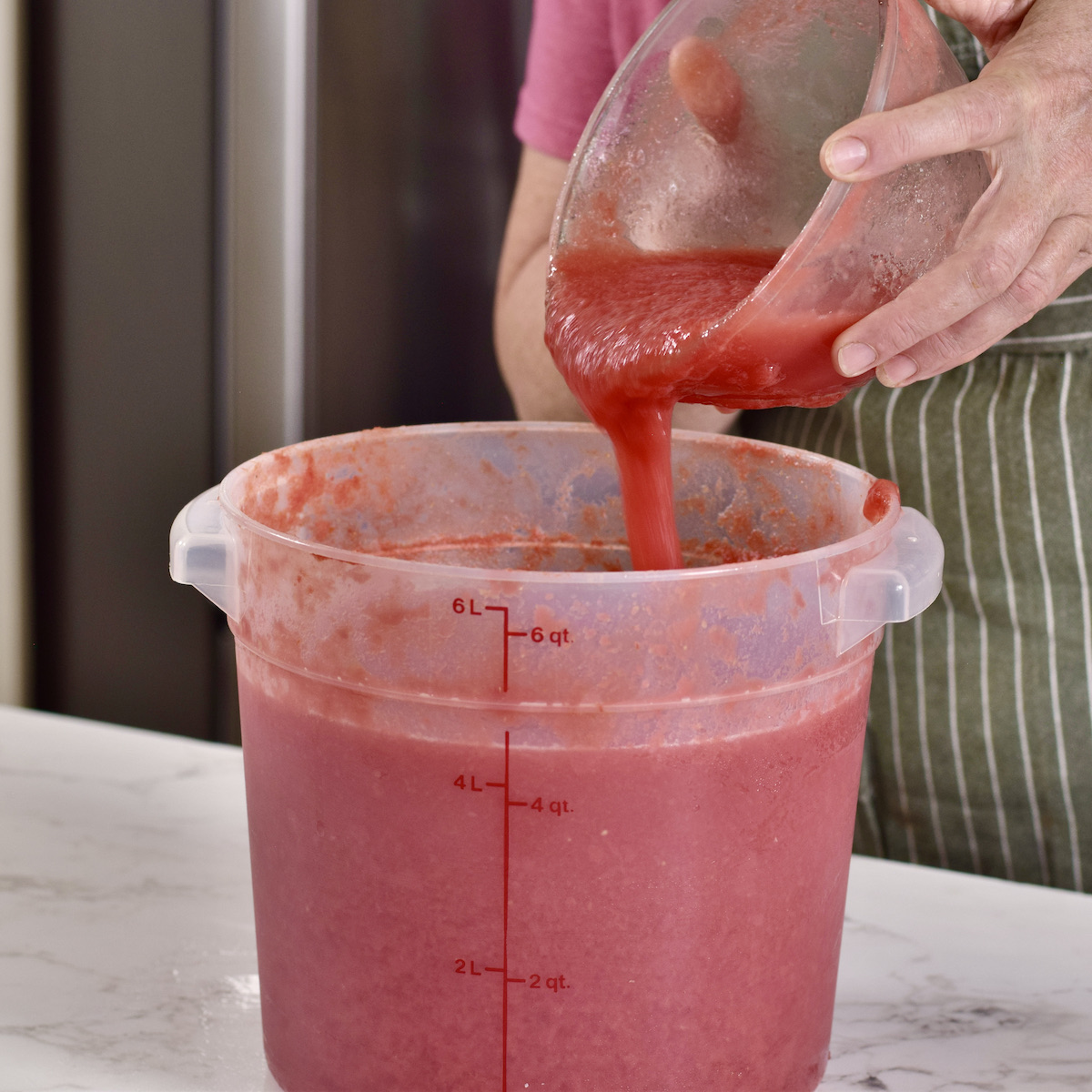
After you turn the tomatoes into sauce, pour into a large storage container with a lid until ready to process or store the sauce.
There are three ways to store homemade tomato sauce:
- Refrigerate
- Freeze
- Water bath canning - the best shelf-stable way to preserve homemade tomato sauce

Fridge: store in airtight containers with lids until you're ready to use it, up to 7-10 days.
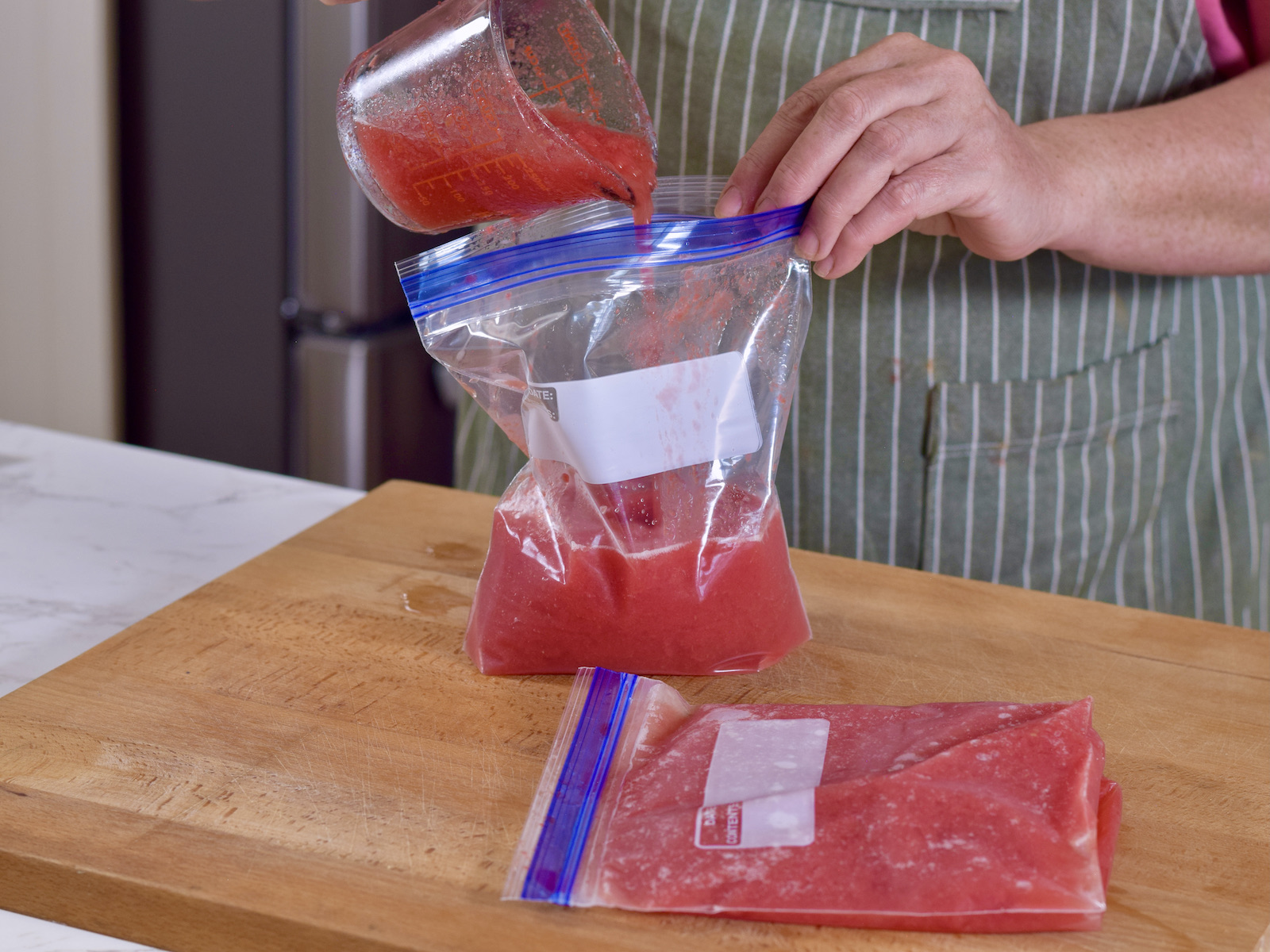
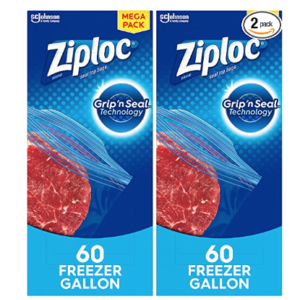
Freezer: pour into freezer bags (that stand upright). Lay flat for easy storage in the freezer. It's faster to thaw out than larger plastic freezer containers
Canning: I will walk you through exactly how to can your tomato sauce using the water bath canning method. It's not hard at all - let me show you! 👇
Why I Love the Water Bath Canning Method
Canning at home might seem intimidating at first, but it's really straightforward and totally easy to do. It is labor-intensive, but it's really easy. You should plan on spending a while morning or an afternoon on this project.
I think it is by far the best way to preserve fresh garden tomato sauce for long term storage for several reasons:
- it will save you money since you can reuse your jars for years.
- Canning garden tomatoes is so much more delicious and tangy than the store bought sauce in metal cans.
- No preservatives or additives.
- You don't have to worry about allowing extra time to thaw out sauce (if you kept yours in the freezer). With canning, you just open a jar and it's ready to use.
Disadvantages: the time it takes might seem like a disadvantage, but I find it kind of therapeutic. Put a good movie on, clear off your counters, and just enjoy a good, old-fashioned home project.
Another drawback is that you need space to store canning equipment. If you have room for a big pot, you can keep most of the canning supplies you need inside that pot, which might make that a little easier.
Water Bath Canning Step by Step
Start by setting your water bath canner on the stove and filling it with water. You will need enough water to cover the tops of the jars by 2 inches. I like to leave the canner on the stove and fill it by using pitchers full of water (to save my back). Heat the water to a simmer over high heat while you prepare the tomato sauce.
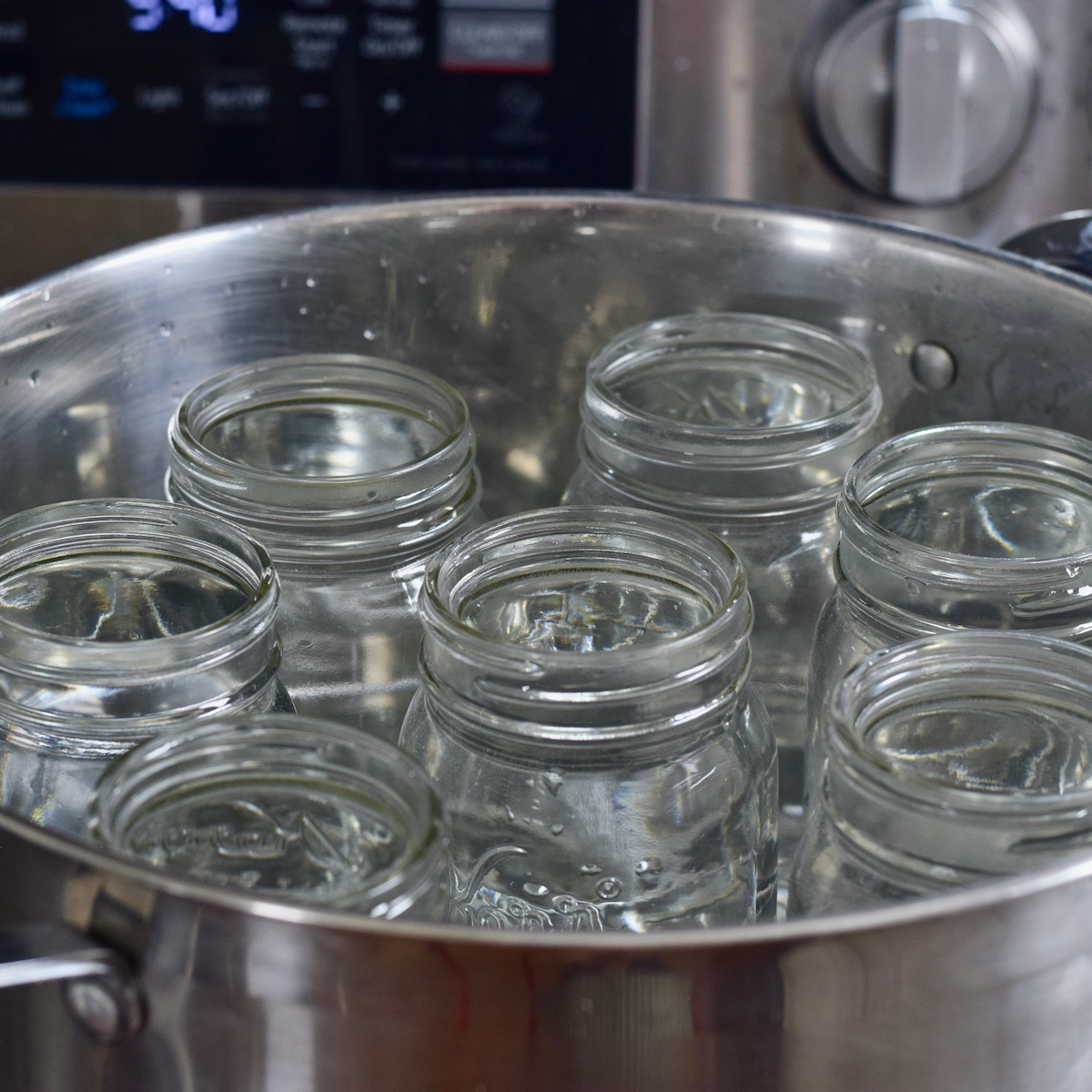
step 1. Sterilize jars and keep in hot water. A great idea is to use the water in the water bath canner to keep the jars hot until ready to fill with tomato sauce.
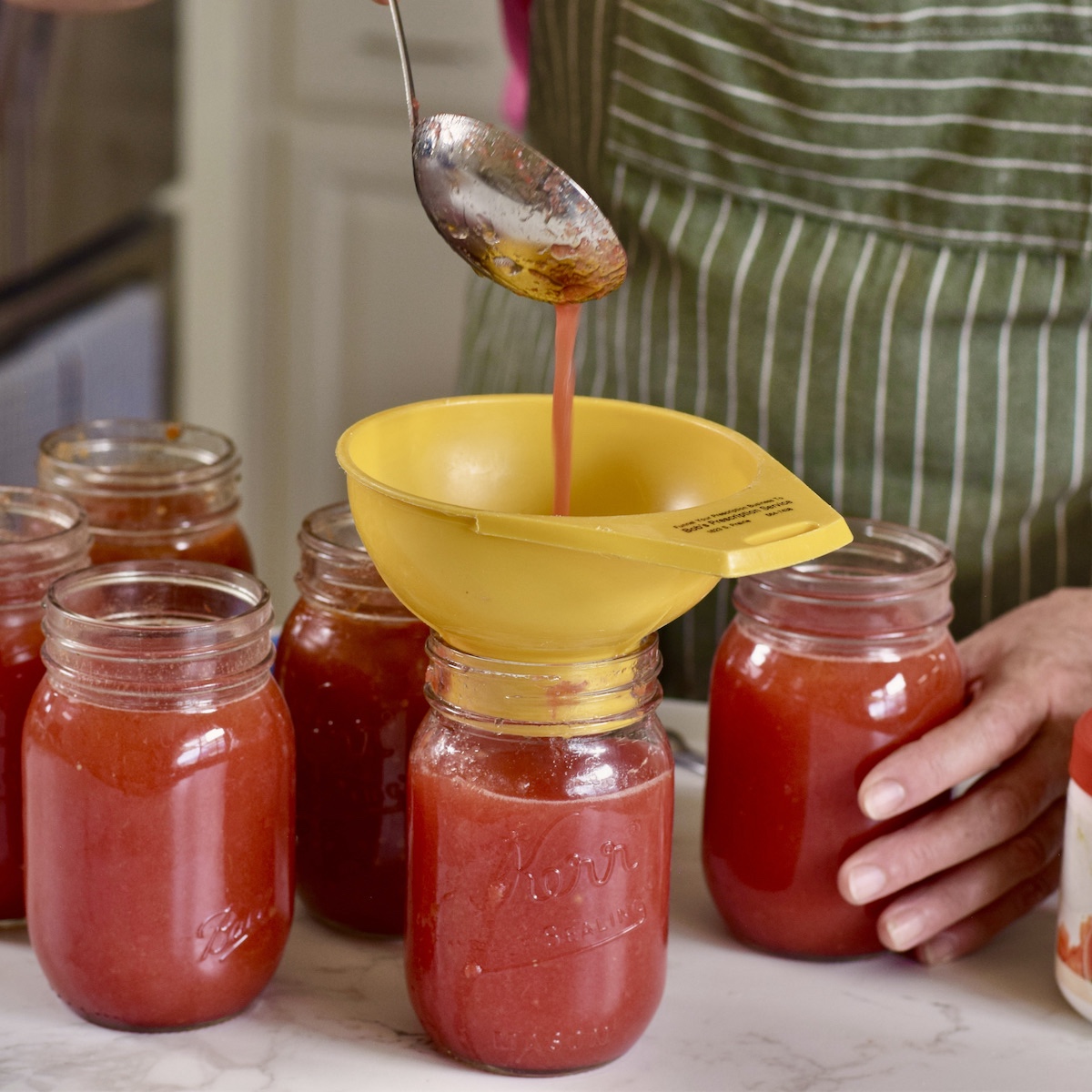
step 2. Heat the tomato sauce in a large pot on the stove over medium heat until it comes to a simmer. Ladle into jars, leaving ½ inch head space.
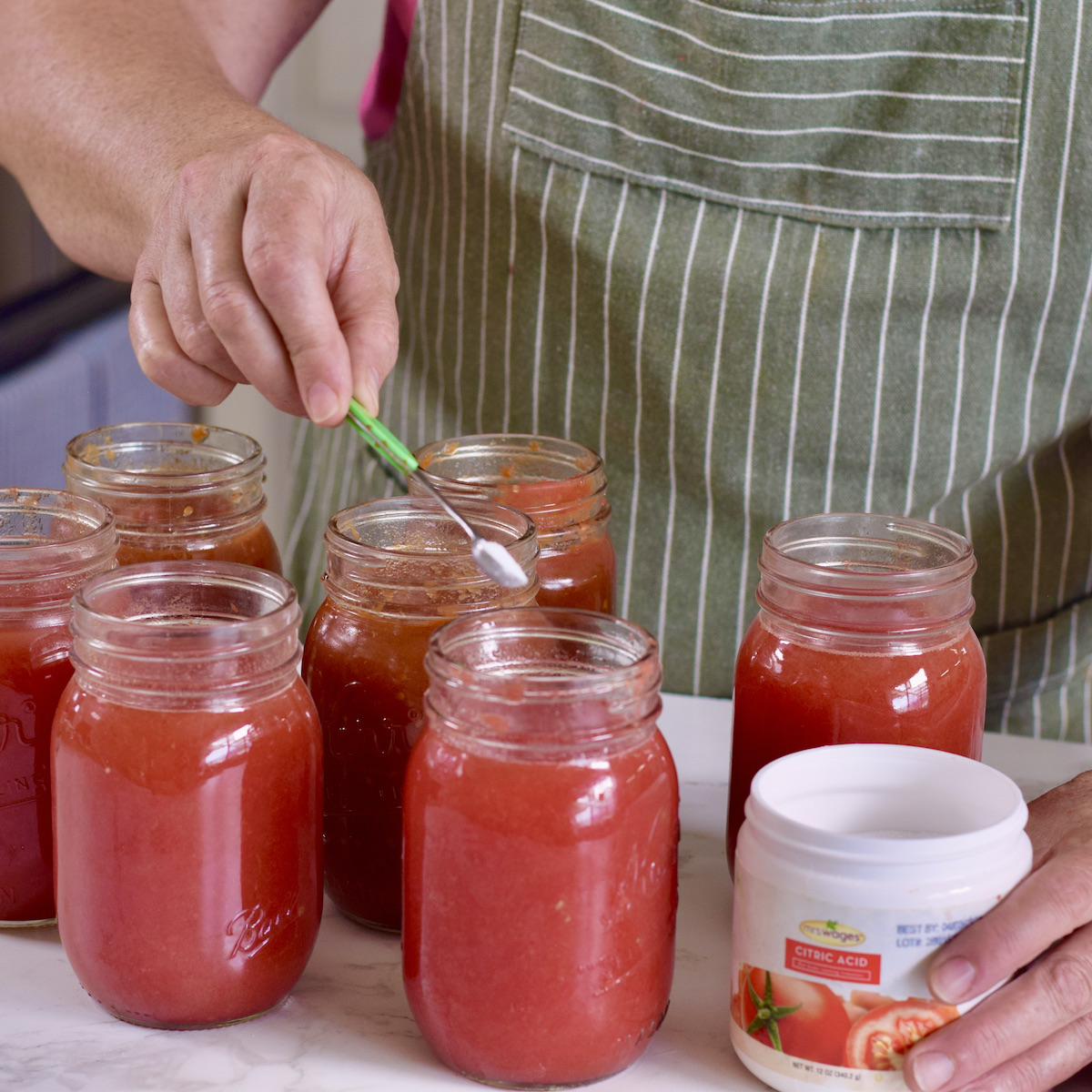
step 3. Add ¼ teaspoon citric acid to each jar, to ensure that the tomato sauce has the right acidity to be safely preserved in a water bath. You can also use lemon juice, but you'll need about a tablespoon for each jar.
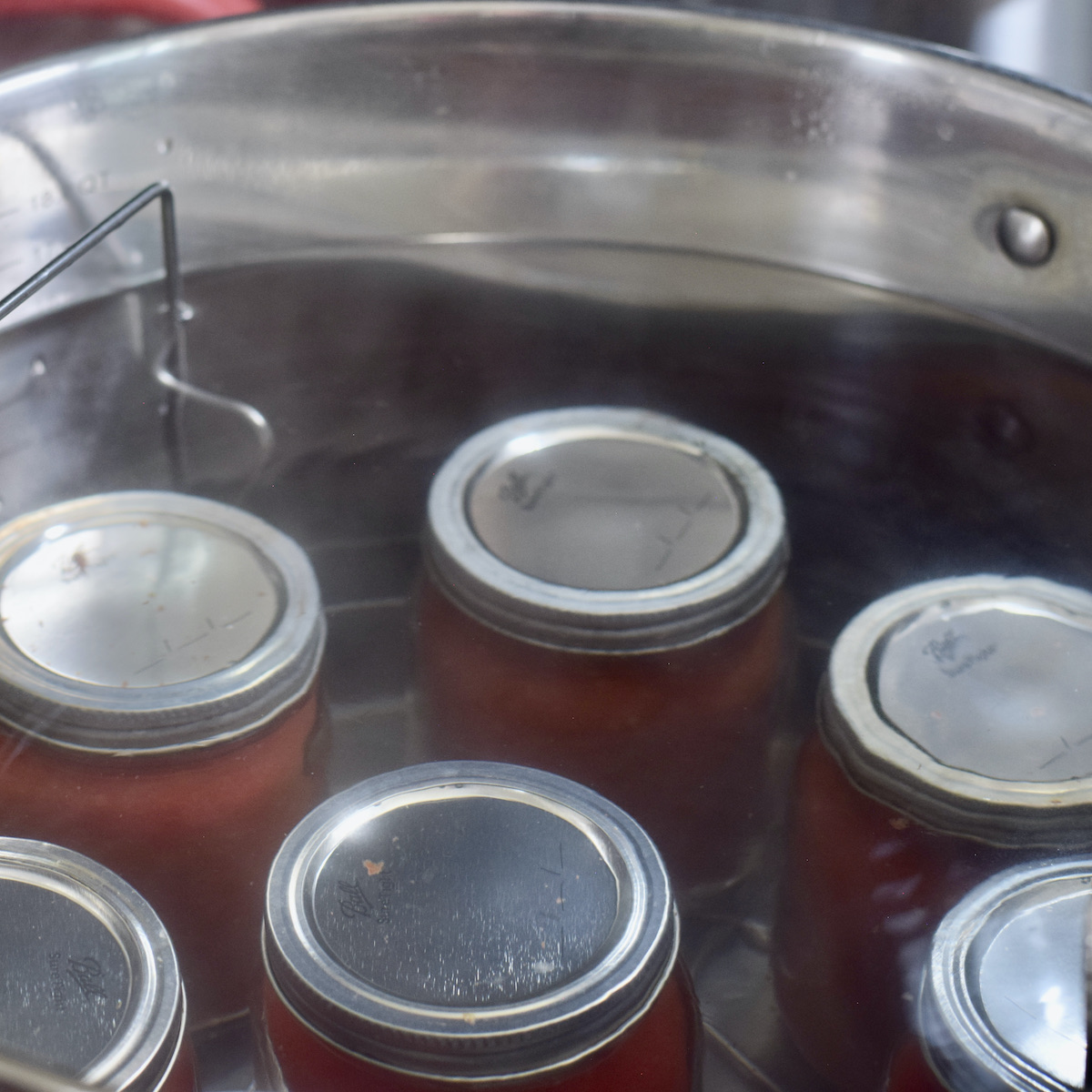
step 4. Add clean and sterile lids and rings to the jars, and add to the water bath canner. Fill with hot water until it covers the jars by 2 inches. Bring to a boil and set a timer for 30 minutes. Turn off and remove the jars from the boiling water. Using a canning jar lifter is the best way to safely lift the jars without them slipping or you burning yourself.
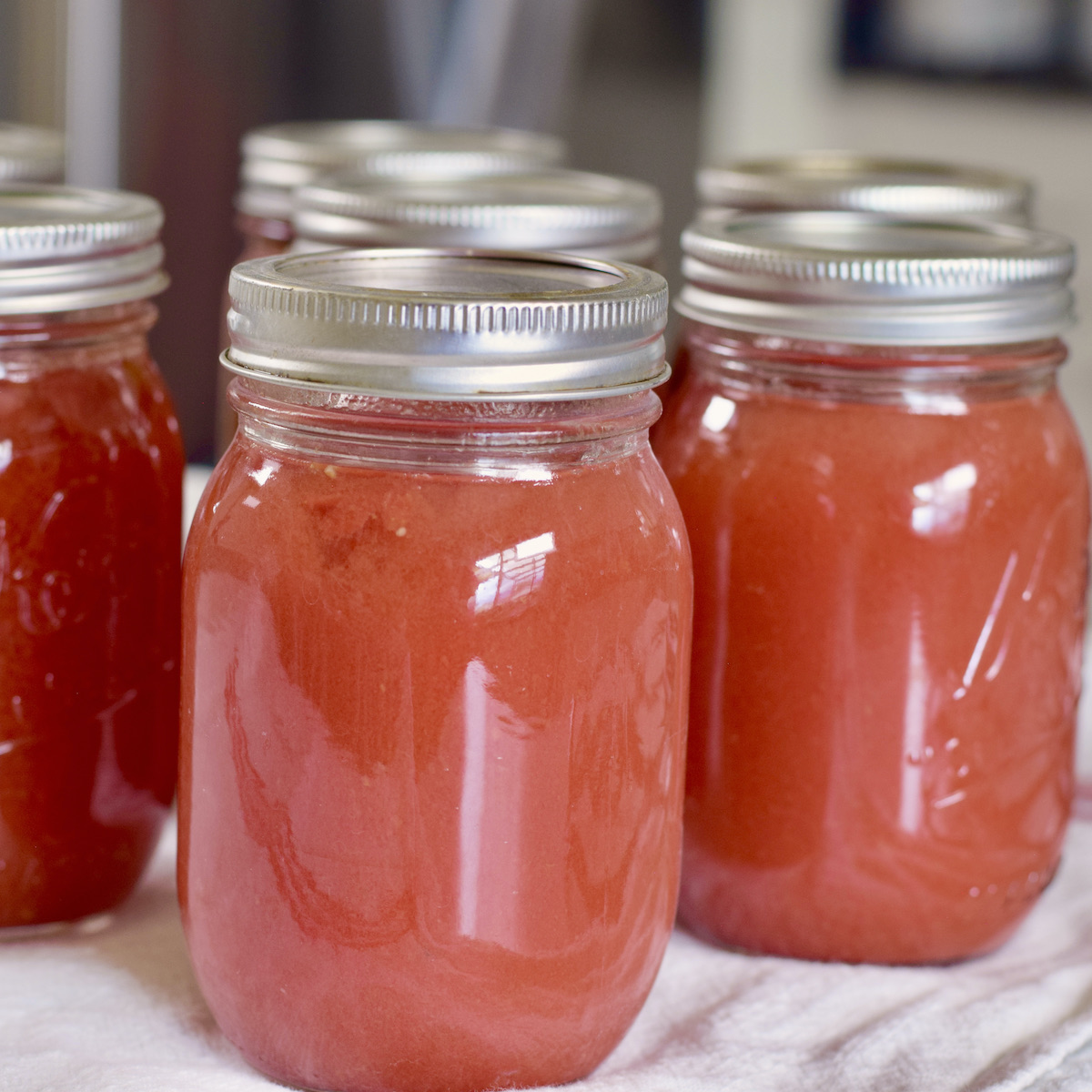
Step 5. Let them cool on a clean dry towel. As they cool off, you will hear each lid "pop" or "click". When you hear that sound and the lid is completely flat (no bulging on the lid), then you know it is safely sealed and preserved. Label the jars and store in a cool, dry place for up to a year.
Bonus Tips & Tricks
Bonus Tip 👇
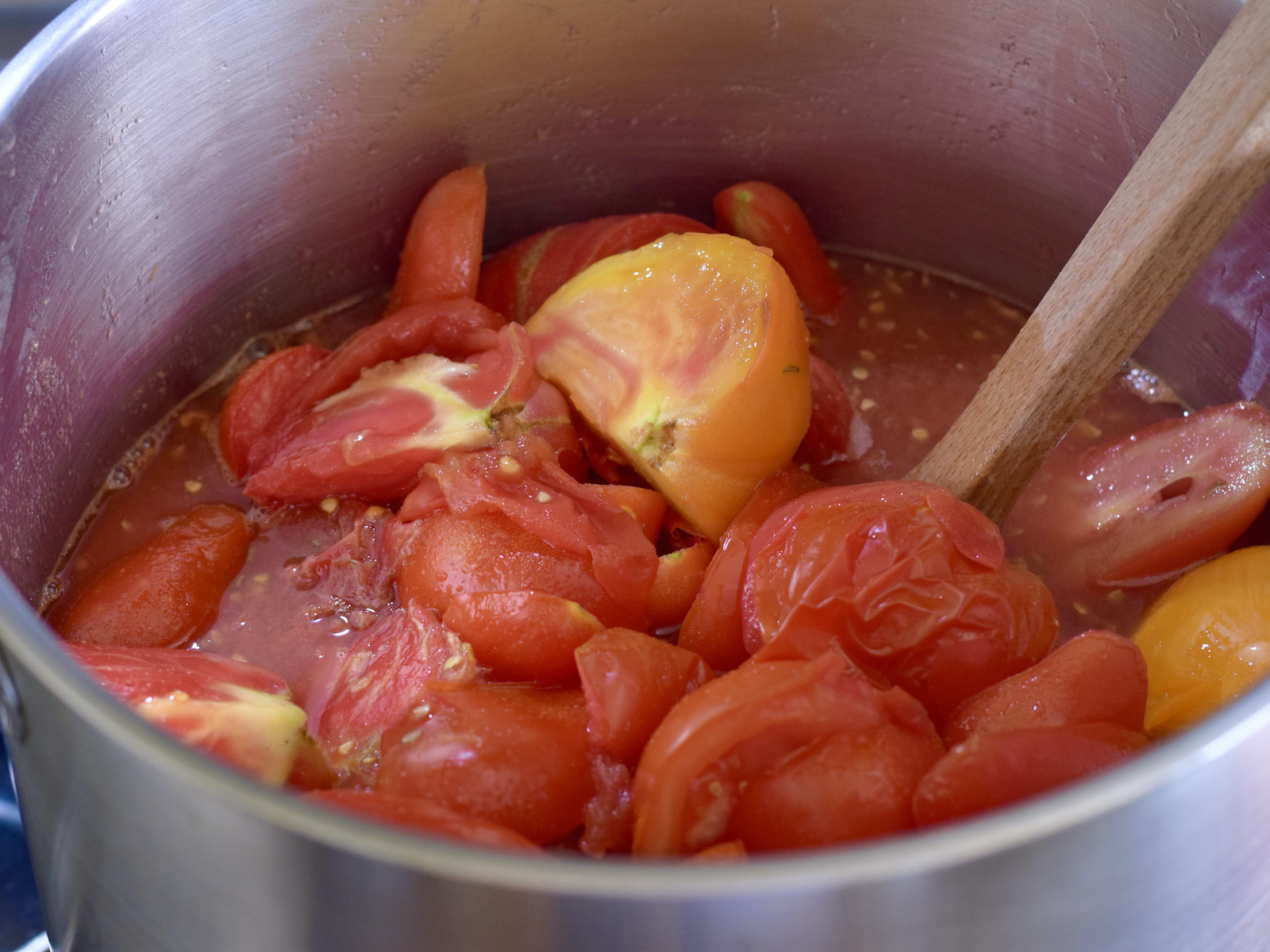
If your tomatoes don't seem very juicy, try cutting them in half or quarters and heating them in a large pot over medium heat to soften them up before running them through a food mill. You will extract more of the juicy pulp, and it makes the whole process go more quickly & smoothly.
You don't need to bring them to a boil (although it won't ruin anything if you do). Just heat them gently to soften them up to extract all the goodness you can from them when they get processed through the food mill. I don't often have to do this, but it is good to keep in mind if you need this tip someday!
What Can You Make with Homemade Tomato Sauce?
You can use homemade tomato sauce in any recipe that calls for tomato sauce!
Try out your fresh garden sauce in these recipes:
- spaghetti sauce: I first learned to make tomato sauce mainly so I could make homemade spaghetti sauce from the surplus of tomatoes from my garden! It's my favorite thing to make with garden tomatoes during the busiest time of tomato season (which for us is August and September).
- tomato soup: I prefer to make my own quick tomato soup from tomato sauce to avoid corn syrup and wheat starch.
- chili mac: on of my family's favorite recipes! This one is gluten free and super easy to make on a busy night.
- shepherd's pie: make this recipe some cold winter's evening for dinner, and you'll be so glad you saved that homemade tomato sauce during the summer!
- pizza sauce: a quick sauce for pizza is a good thing to make from a jar of tomato sauce, a little bit of tomato paste, some garlic, and fresh herbs (or dried) like basil and oregano.
- chili: I've got a delicious vegetarian chili recipe that uses tomato sauce, and can be cooked in the slow cooker.
Recipe for Homemade Tomato Sauce
Have you ever wished you could capture the sweet and tangy flavor of sun-ripened tomatoes from your garden? Make homemade tomato sauce and you can enjoy that delicious flavor long after summer ends.
- Prep Time: 30 minutes
- Cook Time: 30 minutes
- Total Time: 1 hour
- Yield: 7-8 pints 1x
- Category: dressings, sauces, seasonings
Ingredients
- tomatoes, about 15 -18 pounds (see Note below)
- citric acid, about 2 teaspoons
Instructions
- wash tomatoes and cut in half.
- Run the tomatoes through a food mill to remove the skins and seeds to make a smooth puree.
- Store the tomato sauce in airtight containers in the refrigerator until needed, about 7-10 days.
- for long term storage, freeze in freezer safe bags, or can them using a water bath canner as shown in the blog post.
Equipment

Ball Wide Mouth Pint Glass Mason Jars with Lids and Bands
Buy Now → Buy Now →
  Buy Now →
  Buy Now →
 Notes
Be sure and read the blog post to see all the step by step instructions with pictures.
Lemon juice can be used in place of the citric acid. You will need 1 tablespoon of lemon juice for each pint jar of tomato sauce.
Note: Some tomatoes will be juicier and meatier than others, which is why the recipe says 15 - 18 pounds of tomatoes. It's more of a guideline, really 🙂

If you have any questions about canning, please leave a comment at the end of this post! I know I had a lot of questions when I first starting canning, and your question could be helpful to other readers who see it. I'll do my best to answer it, or link to someone who can 🥫🙃
Tomato Sauce FAQs
It is not necessary (for food safety reasons)to remove tomato skins in order to make tomato sauce, but it is recommended. If you leave the skins on, there will be bits and pieces of tomato skin that don't break down, even when it's cooked. Those little pieces often curl up, leaving you with the texture of pine needles or grass bits in your mouth.
Yes you can make tomato sauce from any type of tomato, but paste or plum varieties are recommended for the thickest, meatiest sauce. Some varieties, such as beefsteak or many heirloom tomatoes will have more water and seeds than other tomato varieties, and will have to be cooked for a longer time until they get thick. Read the section on How to Chose Tomatoes (above) for more info on tomato varieties.
In my mind, tomato sauce generally refers to a plain sauce made of tomatoes. It can be used as a component in pasta sauce. Pasta sauce, generally, has added ingredients like herbs, garlic, etc. Its purpose is to enhance the flavor of pasta. Some recipe websites refer to their pasta sauce as tomato sauce though - I think it's a cultural thing.
If you accidentally let the tomatoes continue to boil for a few extra minutes, don't worry. It won't adversely affect their safety or flavor, but it is possible to process them for too long. This will eventually lead to the tomatoes breaking down too much, leaving you with kind of a loose, soupy texture. That also leaves you with some loss of nutrients, although that's hard to quantify. Processing for too long may also cause the jars not to seal.
Leaving out the citric acid or lemon juice could very likely mean that there is not a high enough level of acidity to preserve the tomatoes safely, which could lead to a serious illness called botulism. If you are not sure if you added citric acid or lemon juice, your safest bet is to open the jars, add the acid, bring to a boil, and then re-process the jars.
You could also store the tomatoes in the refrigerator and use them within a week, or add to freezer containers and freeze for several months.
Special Equipment Checklists
I put checklists with all the links (with pictures) to all the equipment you might need for making and canning tomato sauce right here in one spot to make it even easier for you. I want you to succeed!
Making Tomato Sauce
You will need:
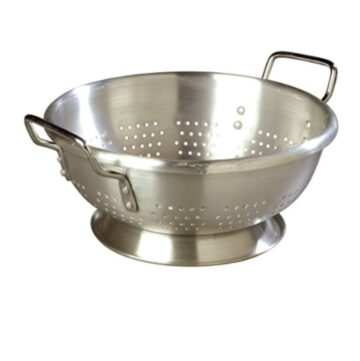
- a large bowl or colander for washing the tomatoes
- a sharp knife to cut them in halves or quarters
- a food mill, which is the best way to remove the skins and seeds all at once
Tomato Sauce Equipment
 Buy Now →
Buy Now →
Buy Now →  Buy Now →
 Canning Tomato Sauce
You will need:
- glass jars, lids, rings
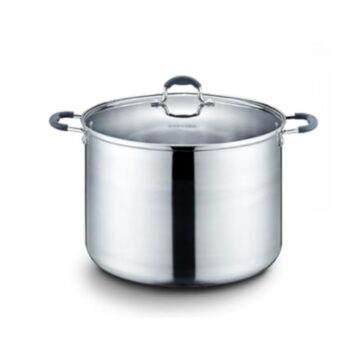
- water bath canner, or a very large pot of water that will hold all your jars
- canning jar lifter
Canning Equipment
Ball Wide Mouth Pint Glass Mason Jars with Lids and Bands
Buy Now → Buy Now →
Buy Now →
Buy Now → Freezing and Storing Tomato Sauce
You will need:
- a storage container for your sauce while you mill the tomatoes
- freezer safe bags, and a Sharpie marker to label them
- airtight lids that fit on your glass jars
Freezing and Storing Equipment
 Buy Now →
Buy Now →
Buy Now →  Buy Now →
 More Recipes that Use Garden Tomatoes


Recipe creator: Kristie Winget. I love gardening, singing, and now I love canning too. Here's a little more about me.
Comments
No Comments